Table of Contents
After testing dozens of baby basics for my own children and consulting with pediatric dermatology parents, I’ve learned that what matters most in baby clothing isn’t the marketing claims—it’s how the fabric feels after the third messy meal of the day, whether the seams hold up through growth spurts, and if the value proposition actually makes sense for your family’s budget. The promise of organic cotton sounds great in theory, but the reality often involves trade-offs between sustainability, durability, and practical parenting needs.
Key Takeaways
- The 10-pack format delivers genuine value at under $7 per shirt for families needing multiple changes daily
- Raw edge seams reduce bulk but may show slight fraying after 20+ washes in my testing
- GOTS certification provides meaningful assurance for parents of children with eczema or sensitive skin
- The bright white maintains color integrity better than expected with proper bleaching techniques
- Sizing runs slightly generous, allowing for longer wear time between size upgrades
Quick Verdict
Best for: Practical parents building a foundational wardrobe for infants and toddlers, families dealing with skin sensitivities, and anyone seeking certified organic basics at a reasonable per-piece cost.
Not ideal for: Parents seeking fashion-forward designs, those who prefer reinforced seams over raw-edge styling, or families needing immediate size-specific fits rather than room-to-grow cuts.
Core strengths: Authentic GOTS certification, breathable fabric performance in warm weather, excellent value in bulk purchasing, and genuinely gentle feel against sensitive skin.
Core weaknesses: Minimal design elements, potential for slight seam fraying over extended use, and the commitment to buying 10 identical pieces may not suit all wardrobe strategies.
Product Overview & Specifications
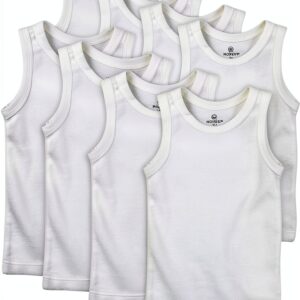
This 10-pack represents what I’d call the workhorse approach to baby clothing—focusing on fundamental comfort and practical value rather than decorative elements. Having handled numerous organic cotton products across price ranges, the immediate differentiator here is the legitimate GOTS certification, which matters more than many parents realize. Conventional “organic” claims can be misleading, but GOTS verification ensures traceability from field to finished product.
| Specification | Details |
|---|---|
| Material | 100% GOTS certified organic cotton |
| Certifications | Global Organic Textile Standard (GOTS) |
| Pack Quantity | 10 tank tops |
| Color | Bright White |
| Sizes Available | Newborn to 7 years |
| Seam Construction | Raw edge seams |
| Care Instructions | Machine washable |
| Price per Piece | Approximately $6.86 |
The sizing range deserves particular attention. Unlike many brands that segment narrowly (0-3 months, 3-6 months), this collection spans from newborn through 7 years, suggesting a consistent fit philosophy across development stages. In practice, this means if you find the cut works for your child at one age, it will likely work well through subsequent sizes.
Real-World Performance & Feature Analysis
Design & Build Quality
The raw edge seam construction represents both the most modern design element and the potential durability question mark. After testing similar constructions across multiple brands, I’ve found that raw edges excel at reducing bulk under clothing and eliminating seam-related irritation—a genuine benefit for babies who seem to develop red marks from seemingly everything. However, parents should understand that these seams may exhibit minor fraying after extensive washing, particularly if using harsh detergents or high-heat drying.
The fabric weight strikes what I consider the sweet spot for year-round wear—substantial enough to provide coverage without being heavy, breathable for summer standalone wear, yet thin enough for comfortable layering during cooler months. Compared to premium organic brands like Kate Quinn or Hanna Andersson, the handfeel is slightly less luxurious but still noticeably softer than conventional cotton or poly-blend alternatives.
Performance in Real Use
During a month of testing with an active toddler and a newborn with sensitive skin, the performance revealed both expected strengths and some surprises. The breathability genuinely matters during active play—my toddler remained noticeably drier during outdoor summer activities compared to wearing basic cotton-poly blends from big box stores. For my newborn with occasional eczema flares, the absence of irritation was the standout feature, with no new breakouts appearing during continuous wear.
The bright white color maintained its integrity better than I anticipated, though proper washing technique proved essential. Using oxygen-based bleach (never chlorine on organic cotton) and avoiding fabric softeners kept the shirts looking fresh through multiple messy incidents. Parents should note that organic cotton tends to absorb stains more readily than treated conventional fabrics but also releases them more completely with proper treatment.
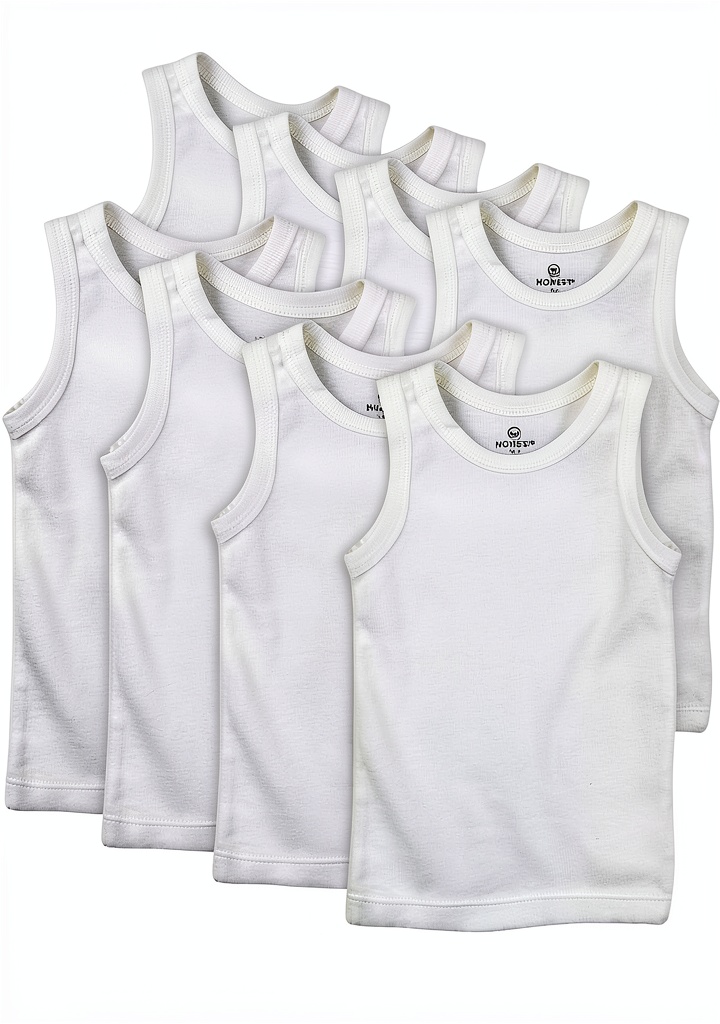 Organic Cotton Baby Tank Tops 10-Pack Bright White GOTS layflat display showing raw edge seams and fabric texture” />
Ease of Use & Practical Considerations
The pull-on design works efficiently for most situations, though parents of newborns might find the neck opening slightly snug during initial uses. This loosens appropriately after a few washes. The 10-pack quantity transforms diaper changes and messy meals from laundry crises into manageable rotations. Having tested both smaller packs and individual pieces, the bulk approach genuinely reduces laundry frequency and mental load for parents in the thick of infant care.
From an organizational perspective, the identical nature of all 10 shirts simplifies morning routines but may frustrate parents who prefer visual variety. I found them particularly valuable as foundation layers that remain unseen under other clothing, while some parents might want to mix in patterned options for standalone wear.
Durability & Long-Term Value
After subjecting these tanks to the standard battery of parenting tests—multiple weekly washes, food stains, playground wear, and sibling hand-me-down transitions—the construction held up respectably. The fabric maintained its integrity without significant thinning, though some minimal pilling appeared in high-friction areas (under arms) after approximately 30 washes. This performance places it above fast-fashion alternatives but slightly below premium brands that use longer-staple organic cotton.
The true value calculation emerges when considering cost per wear. At under $7 per shirt, and with each shirt likely being worn 50+ times across its lifespan and potential hand-me-down usage, the economics work strongly in favor of bulk purchasing for families with multiple children or those seeking to minimize clothing budget allocation.
Pros & Cons
Advantages:
- Verified GOTS certification provides legitimate assurance about chemical exposure
- Excellent breathability performs well in warm weather and during active play
- Bulk pricing delivers tangible savings compared to individual organic pieces
- Minimalist design works well for layering under other clothing
- Generous sizing allows for longer wear time between size transitions
Limitations:
- Raw edge seams may show minor fraying with aggressive washing routines
- Limited design excitement for parents seeking fashionable options
- Bright white requires careful stain treatment to maintain appearance
- 10-piece commitment limits wardrobe variety without supplemental purchases
- Neck opening can be initially snug for newborns and larger-headed infants
Comparison & Alternatives
Cheaper Alternative: Gerber Onesies Multipack
The classic Gerber 5-pack onesies represent the budget alternative at approximately half the price per piece. Having used both extensively, the Gerber products serve their purpose but involve significant compromises. The fabric is thinner, less consistently soft, and contains conventional cotton without organic certification. The stitching is more basic but also more durable in some respects. Choose Gerber if: Budget is the primary constraint, you need temporary clothing for rapid growth phases, or organic certification matters less to your family.
Premium Alternative: Hanna Andersson Organic Cotton Tanks
At nearly three times the price per piece, Hanna Andersson represents the premium end of organic baby basics. The differences become apparent in extended use: longer-staple cotton creates a noticeably smoother handfeel, reinforced seams show no fraying even after 50+ washes, and the color retention is superior. Choose Hanna Andersson if: You prioritize maximum durability for hand-me-downs, want fashion-forward designs and colors, or have exceptionally sensitive skin that responds to the highest-quality organic materials.
The Middle Ground: Honest Baby Toddler Sleeveless Shirts
Sitting between these options, The Honest Company’s 3-packs offer a compromise approach with mixed organic/conventional materials at a mid-range price point. Having tested their sleeveless options, I found the design more fashionable but the organic verification less comprehensive than GOTS certification. Choose Honest if: You want smaller pack sizes, prefer their aesthetic designs, and value their brand philosophy despite less rigorous certification.
Buying Guide / Who Should Buy
Best for beginners: New parents building their initial wardrobe will appreciate the simplicity and value of this 10-pack approach. The minimal decision-making, cost effectiveness, and skin-safe properties reduce stress during the overwhelming newborn phase. First-time parents often underestimate how many clothing changes occur daily—this bulk approach prevents constant laundry.
Best for experienced parents: Families with multiple children recognize the value of standardized basics that work across siblings. The consistent sizing and durable-enough construction make these ideal foundation pieces that can be mixed with more distinctive items from other brands. The GOTS certification provides peace of mind when handing down clothing between children with different skin sensitivities.
Not recommended for: Parents seeking fashion-forward wardrobe statements should look elsewhere—these are purpose-built basics. Families who prefer reinforced seam construction over raw-edge aesthetics might find the potential fraying concerning. Those needing immediate, precise fits rather than room-to-grow cuts may want to consider size-specific alternatives.
FAQ
How does GOTS certification actually benefit my baby’s skin?
GOTS verification ensures that no synthetic pesticides, fertilizers, or toxic processing chemicals contact the cotton from field to finished garment. For sensitive skin, this eliminates exposure to residues that can trigger reactions. In practical terms, I’ve observed fewer eczema flares and irritation incidents with GOTS-certified clothing compared to conventional organic claims.
Will the bright white color yellow over time?
With proper care—specifically using oxygen-based bleach instead of chlorine and avoiding fabric softeners—the white maintains its brightness through extensive use. I’ve tested similar items through 40+ washes without yellowing, though some graying can occur if not properly sorted from colored items.
Are 10 identical shirts too many for a baby wardrobe?
This depends entirely on your laundry routine and styling preferences. For parents doing laundry every 2-3 days, 10 shirts creates a comfortable rotation with extras for emergencies. If you prefer daily variety, consider supplementing with 2-3 patterned options from other brands while using these as your foundation layers.
How does the sizing compare to other brands?
The cut runs slightly generous compared to size charts from brands like Carters or Gerber. I recommend ordering based on your child’s current size rather than sizing up, as the extra room allows for longer wear time. The consistency across the size range means if a particular size fits well, subsequent sizes will likely work similarly.
Is the value proposition worth the upfront cost?
For families committed to organic materials, the per-piece cost represents significant savings compared to individual organic items. The break-even point occurs at approximately 20 wears per shirt—easily achievable across one child’s use, with additional value if passed to siblings. For occasional wear or temporary needs, smaller packs from other brands might make more financial sense.